


Ever looked at a building going up and thought, “How did that get there so fast?” These days, it might not be traditional construction at all—it could be modular. As real estate costs climb, timelines shrink, and flexibility becomes non-negotiable, businesses are turning to modular units to grow without the usual delays and overhead. In this blog, we will share how modular builds are reshaping commercial expansion across industries.
Speed Meets Practicality in a Shifting Market
In today’s market, nobody has time to wait 18 months for a brick-and-mortar space that might already be too small by the time it’s finished. Businesses—especially those in logistics, retail, food service, or storage—need physical space that scales with demand, not against it. This is where modular construction, including portable workspaces, mobile storage, and temporary facilities, steps in.
Unlike traditional construction, which starts from scratch every time, modular setups use pre-fabricated units built off-site. These units arrive ready to deploy, stack, or combine—fitted out with electrical, insulation, and security features. It’s not just about speed; it’s about reducing risk. No weather delays, fewer subcontractor dependencies, and a clearer path to occupancy.
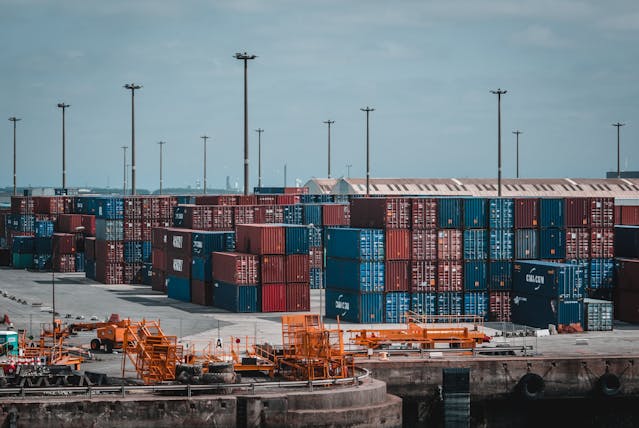
Even more appealing, some businesses are tapping into existing supply. For example, those looking to scale without long-term real estate commitments are exploring shipping containers for sale that can be converted into fully functional units. These containers offer durable, mobile space solutions for retail fronts, offices, storage hubs, and temporary sites—all without needing a massive investment in construction.
The appeal isn’t theoretical. During and after the pandemic, modular setups helped companies stay nimble—pivoting locations, expanding to meet demand surges, or shrinking footprints without locking into costly leases. Now, that flexibility is no longer a Plan B. It’s a core strategy.
Modular Units Support Fast Growth With Fewer Tradeoffs
When businesses grow, the last thing they want is to be held hostage by long build times or rigid leases. Modular units offer a way to scale physical infrastructure on business terms. This applies whether you’re launching a product line, responding to a regional uptick in demand, or testing a new market altogether.
Let’s say a distribution company wants to establish a regional micro-hub near a major freeway. Leasing a warehouse might take six months. Building one could take more than a year. Setting up modular units? Weeks. It’s the same logic that drives pop-up retail, mobile medical clinics, and semi-permanent educational facilities. The physical shell adjusts to fit the business goal, not the other way around.
One overlooked advantage is cost transparency. Modular builds often come with clearer, all-in pricing that includes transport, installation, and setup. That helps prevent the budgeting surprises that plague many traditional developments where one delay triggers ten more, each with a separate invoice.
Additionally, modular solutions offer more predictability in permitting. Since many components are built to code before they arrive on-site, the permitting process can be faster, especially for temporary or semi-permanent installations. That helps companies avoid the red tape that slows down or blocks expansion altogether.
Sustainability Isn’t a Buzzword When It Saves Money
Sustainability in business isn’t just a press release anymore—it’s an operational necessity. From rising energy prices to consumer pressure for transparency, companies are being pushed to build cleaner, reuse more, and waste less. Modular units line up well with that mandate, often using recycled materials, creating less construction debris, and consuming less energy in fabrication.
Take retrofitted shipping containers. Repurposing them for commercial use keeps them out of landfills and reduces demand for new construction materials. Plus, with the right insulation and power systems, they can be surprisingly energy-efficient. Solar arrays, green roofs, and low-flow plumbing can be added just like in traditional buildings.
Beyond environmental wins, this model also boosts public image—especially important in industries where community visibility matters. A chain that builds eco-conscious pop-up stores in urban areas will earn more goodwill than one putting up steel-and-glass blocks that eat up space and budget.
The real sustainability bonus, though, is flexibility. A unit can be moved, reused, or resold. That extends its lifecycle across multiple uses and locations, making it a better long-term investment than a fixed asset that might one day sit empty.
Less Space, More Function
Modular doesn’t mean bare-bones. The best units are fully functional workspaces, often equipped with HVAC, network wiring, custom lighting, security systems, and even ADA-compliant layouts. In many cases, they outperform older buildings in energy efficiency and layout efficiency because they’re purpose-built instead of repurposed from outdated structures.
There’s also a design advantage. Modular units can be configured in countless ways—stacked, connected, re-angled—to fit irregular lots or support phased construction. A restaurant might start with one kitchen unit and two dining containers. If demand spikes, two more units can be dropped in for extra seating or a second prep line. No demolition. No downtime. Just plug and play.
This scalability supports smart, conservative growth. Businesses no longer need to overbuild in anticipation of demand. They can build just enough, then add more if the market rewards it. That’s a major financial advantage, especially in unpredictable economies.
For industries like hospitality or healthcare, this becomes especially important. A modular wellness clinic or travel office can serve a community quickly, adjust its offerings based on real-time feedback, and move if the need shifts elsewhere. It’s a form of physical agility most traditional buildings just can’t offer.
The Future Favors Agility
Commercial expansion doesn’t need to be slow, costly, or permanently fixed. If anything, the current environment rewards businesses that stay flexible. Supply chains are fragile. Consumer behavior is volatile. And economic forecasts change with every new quarter. Businesses that can adapt their physical footprint quickly, affordably, and intelligently will have the upper hand.
Modular units aren’t just a cost-saving measure or a pandemic-era workaround. They’re now a foundational strategy for any business that views growth as an evolving process rather than a fixed target. Whether used for customer-facing sites, internal operations, or experimental locations, they offer a real-world solution to real-world problems.
And as the definition of commercial space continues to shift, the companies that embrace mobility and modularity will be the ones that don’t just survive change—but lead it. Adaptable space is no longer a bonus feature. It’s how businesses expand without falling apart.
