


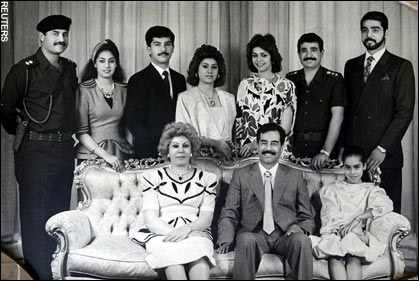
Imagine a world where vital figures in history remain hidden, their stories whispers in the annals of time. Nidal Al-Hamdani fits right into that mysterious category, cloaked in intrigue and questions. Have you ever wondered about the less-spoken influences behind a controversial figure like Saddam Hussein? Nidal ties into this narrative through a significant yet understated role in Iraqi history. Her connection with Saddam wasn’t just incidental; she became his third wife, adding layers to the tales of power dynamics and complex relationships. While Saddam’s name evokes vivid images of dominance, Nidal’s tale is one of subtlety, skill, and survival against a backdrop of harsh political realities. Let’s unfold her enigmatic story.
Marriage with Saddam Hussein
In the smoky shadows of the 1980s, a marriage took place that would quietly ripple through the corridors of Iraqi power. Nidal Al-Hamdani found herself entangled in a union with one of the world’s most controversial leaders, Saddam Hussein. How did this happen? Well, the details are as murky as the desert twilight. Rumor has it that Saddam engineered her previous husband’s divorce, summoning a twist that only a leader of his dictatorial sway could command. While stories like these often leave us with more questions than answers, one thing is clear: Becoming Saddam’s third wife wasn’t a move for the light-hearted or the faint of heart. Their union was a blend of authority, secrecy, and possibly a dash of peril – elements that shaped Nidal’s silent but significant role in Saddam’s inner circle.
Professional Journey in Science
Here’s the thing, Nidal wasn’t just a figure tethered by marriage. Long before the wedding bells of political strategy rang, she blazed trails in the science world. Taking up the helm as the general manager of Iraq’s Solar Energy Research Center, she illuminated paths in renewable energy. Imagine harnessing the power of the blazing Middle Eastern sun and translating it into tangible innovation – that was Nidal’s playground. Her position speaks volumes about her caliber and expertise, suggesting a rich background in science and a formidable academic journey. While being linked to a figure like Saddam often overshadows personal achievements, her career in solar energy stood as a beacon of her intellectual prowess and commitment.
Comparison with Saddam’s Other Wives
You’ve probably noticed that comparison often sharpens the edges of stories, and Nidal’s tale is no exception. When laid alongside Saddam’s other wives – Sajida Talfah and Samira Shahbandar – Nidal’s story takes on unique shades. Sajida, the first wife, bore him several children: Uday, Qusay, and daughters Rana, Raghad, and Hala. Samira followed with Ali. But here’s the kicker: Nidal had no children with Saddam, at least according to most narratives. This absence casts a curious light on her role, sparking speculations about her personal life and influence within Saddam’s private sphere. Was it a choice, circumstance, or simply the nature of her relationship with Saddam? The answers remain as elusive as a breeze in a Baghdad bazaar.
Life under Saddam Hussein’s Regime
Now, picture living in a palatial home, wrapped in luxury, yet every shadow watches you. That’s the atmosphere Nidal endured during her marriage. Enveloped by velvet confines, she lived under intense scrutiny, typical of Saddam’s close-knit circle. Her existence was one of seclusion, a life far removed from public eyes or political chattering. The marriage eventually ended in divorce, but like much of her life, the reasons remain in dim corners. Did she fall out of favor? Was her seclusion a calculated measure of control or self-preservation? Every theory adds a layer to her story, deepening the mystery.
Life after Political Turmoil
Come 2003, when the political ground under Iraq shifted with the US-led invasion, Nidal quietly faded from view. The world’s focus was on Iraq’s tumultuous transformation and Saddam’s fate, leaving little room for the whisperings of those who once hovered in the background. Nidal’s disappearance from the public eye post-Saddam remains one of the many puzzles that Iraq’s 21st-century history embodies. Did she find solace in anonymity, away from the prying eyes of history buffs and political analyzers, or did she remain forever hidden in plain sight? Her vanishing act keeps her story lingering like an unsolved riddle.
Piecing Together Available Information
Here’s where the detective hat comes in. Tracking down Nidal’s early life – her footsteps before becoming a major player in the sidelines of power – is like hunting for fragments of a shattered vase. Sources are scarce, birth details even scarcer. She might have been born in the 1950s, but definitive answers are hazy at best. Even with a click through genealogical databases or a conversation with history enthusiasts, Nidal’s past remains draped in shadow. Each attempt to piece facts together feels like grasping at the faintest echoes in a deserted chamber, full of whispers but shy of clarity.
Conclusion: The Enigma of Nidal Al-Hamdani
Reflect for a moment on shadows that flicker just out of reach – that’s the allure of Nidal Al-Hamdani’s story. Her life remains an enigmatic tapestry of whispers and speculation, blending personal achievements with political enigmas. The tale of Nidal Al-Hamdani beckons us with untold stories and unanswered questions. Will her narrative inspire future historians to unearth details and lift the veil? There’s a certain allure in the possibility, much like waiting for the next chapter of a chronicle that teases more than it reveals. Is a deeper dive into this tale on your bucket list? If you’re curious to explore more about unsolved mysteries and fascinating personalities, you might want to check [Business Hunch] Welcome to the realm of undiscovered stories!
